
Style
Essential Guide to Setting Up a Modern Medical Laboratory in Ghana
Aug
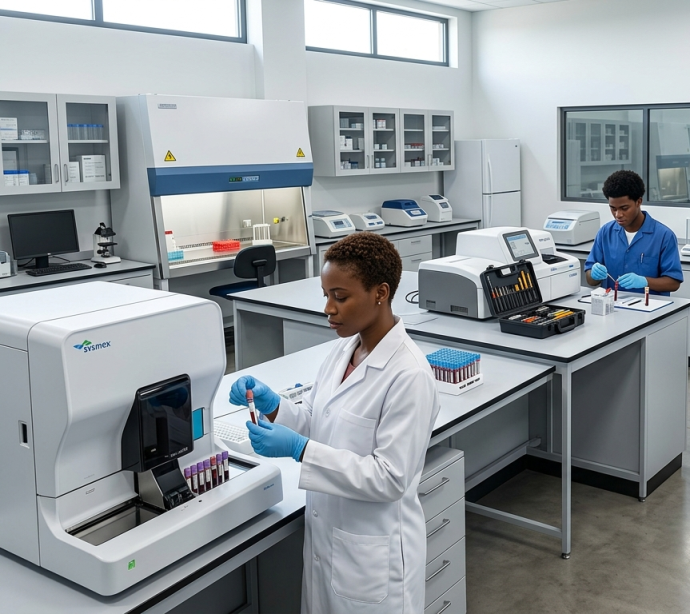
Establishing a reliable diagnostic laboratory is one of the most critical investments a healthcare facility can make. In Ghana, where fast, accurate diagnostic testing directly impacts clinical outcomes, a well-equipped laboratory serves as the backbone of effective medical treatment. From routine full blood counts to complex liver function panels, physician decisions rely heavily on the accuracy of your test results.
However, setting up a modern lab involves far more than simply purchasing analyzers. It requires careful planning around equipment selection, workflow efficiency, quality control, and ongoing supply chain reliability for reagents.
Here is a comprehensive, step-by-step guide to equipping a modern, compliant medical laboratory in Ghana.
1. Core Equipment Categories for a Fully Functional Laboratory
To provide a broad diagnostic scope and high patient throughput, a modern laboratory should be organized into key operational stations, each equipped with specific certified instruments.
A. Hematology Department
Hematology focuses on blood testing, essential for diagnosing anemia, infections, leukemia, and clotting disorders.
- Automated Hematology Analyzer: A 3-part or 5-part differential analyzer is the workhorse of any lab, providing rapid complete blood counts (CBC) within minutes.
- Microhematocrit Centrifuge: Essential for rapid packed cell volume (PCV) determinations, particularly in emergency settings.
- Coagulation Analyzer: Used to assess blood clotting times (PT/INR, APTT) for patients on anticoagulants or prior to surgery.
B. Clinical Chemistry Department
Clinical chemistry evaluates organ function, metabolic status, and electrolyte balances.
- Semi-Automated or Fully Automated Biochemistry Analyzer: Analyzes liver function tests (LFTs), kidney function tests (KFTs), lipid profiles, and blood glucose levels. Fully automated systems are recommended for high-volume facilities to minimize manual error.
- Electrolyte Analyzer: Measures essential ions like sodium, potassium, and chloride, critical for emergency and intensive care patient monitoring.
C. Microbiology & Parasitology Station
Focuses on identifying infectious agents, including bacteria, parasites, and fungi.
- Binocular Compound Microscope: High-quality LED optics with 100x oil immersion lenses are non-negotiable for malaria parasite screening, stool examination, and urine microscopy.
- Incubator & Biosafety Cabinet: Provides a controlled environment for bacterial cultures while protecting laboratory personnel from hazardous pathogens.
- Autoclave (Steam Sterilizer): Heavy-duty sterilization equipment to ensure all culture media, glassware, and hazardous bio-waste are rendered sterile and safe.
D. General Laboratory Bench & Sample Processing
- Standard Laboratory Centrifuge: For separating serum and plasma from whole blood samples.
- Pipettes & Micro-Pipettes: Precision volumetric tools calibrated for micro-liter accuracy when handling reagents and samples.
- Refrigeration & Cold Chain Equipment: Specialized medical-grade refrigerators with digital temperature monitoring to store reagents, control samples, and blood products safely.
2. Infrastructure & Environmental Considerations
Setting up lab equipment requires a controlled physical environment to ensure accurate machine calibration and safety.
- Stable Power & Backups: Diagnostic analyzers contain delicate electronic optical systems. Power fluctuations can corrupt sample runs or damage circuit boards. Every major analyzer must be supported by an Uninterruptible Power Supply (UPS) and connected to your facility’s backup generator.
- Climate & Dust Control: Reagents are temperature-sensitive, and optical lenses in microscopes and analyzers degrade rapidly in high humidity and heat.
- Water Quality: Modern chemistry and hematology analyzers require high-purity demineralized or distilled water for cleaning lines and diluting reagents. Using tap water will cause mineral scale buildup and invalidate test results.
3. Reagent Management and Supply Chain Continuity
An analyzer without reagents is useless. Reagent stockouts lead to lost revenue and force patients to seek diagnostic services elsewhere.
- Open vs. Closed Systems: When purchasing analyzers, understand the difference. Closed systems require proprietary reagents from the original manufacturer, offering high accuracy but binding you to one supplier. Open systems allow you to source compatible third-party reagents, providing flexibility and potential cost savings.
- Reagent Quality Control (QC): Always run daily quality control checks using known control materials before processing patient samples. This ensures that your analyzer is calibrated correctly and that reagents have not degraded due to heat or aging.
- Buffer Stock Management: Partner with a supplier that maintains local inventory in Ghana so you can receive fresh reagent deliveries quickly before your current stock expires.
4. Compliance and Safety Standards
Operating a medical laboratory in Ghana requires strict adherence to regulatory guidelines set by the Allied Health Professions Council (AHPC) and the Food and Drugs Authority (FDA) Ghana.
- Personal Protective Equipment (PPE): Ensure technicians are supplied with medical-grade lab coats, nitrile gloves, safety goggles, and face shields.
- Biohazard Waste Management: Color-coded segregation bins for sharps, infectious waste, and general waste must be enforced to prevent accidental needle-sticks or cross-contamination.
- Preventive Maintenance Contracts: Schedule regular servicing with qualified biomedical engineers to clean optical pathways, replace fluid tubing, and recalibrate mechanical parts.
Partner with Forever Medicals for Your Complete Laboratory Setup
Building or upgrading a diagnostic laboratory does not have to be complicated. Forever Medicals & Trading Limited offers end-to-end laboratory solutions across Ghana—from supplying certified hematology and chemistry analyzers to providing routine reagent supplies and technical calibration.
Whether you are fitting out a small community clinic lab or a high-volume diagnostic center, our local technical team ensures your facility operates with precision, safety, and zero unnecessary downtime.
Ready to Equip Your Medical Laboratory?
Contact our clinical laboratory specialists today to request a comprehensive equipment catalog, discuss customized laboratory setups, or request a quote.
- Email:
[info@forevermedicals.com | forevermedicals@gmail.com] - Phone / WhatsApp:
[+233 244024183]
